Terralta
Turning a real-estate proposition into a curated editorial experience.
A development sells a place that does not exist yet. Photography cannot help you.
The Challenge
Real-estate communication has a structural problem: at the point of sale the thing being sold does not exist. What exists is land. So the category defaults to renders of buildings nobody has stood in, and every development ends up looking like every other development.
The Ambition
Translate the proposition into a coherent, premium editorial narrative — something a prospective buyer would keep rather than discard.
The Response
Insight. The land was already the argument. Terralta did not need to render a future; it needed to document a present — what actually grows there, what the ground is, what you would be buying into.
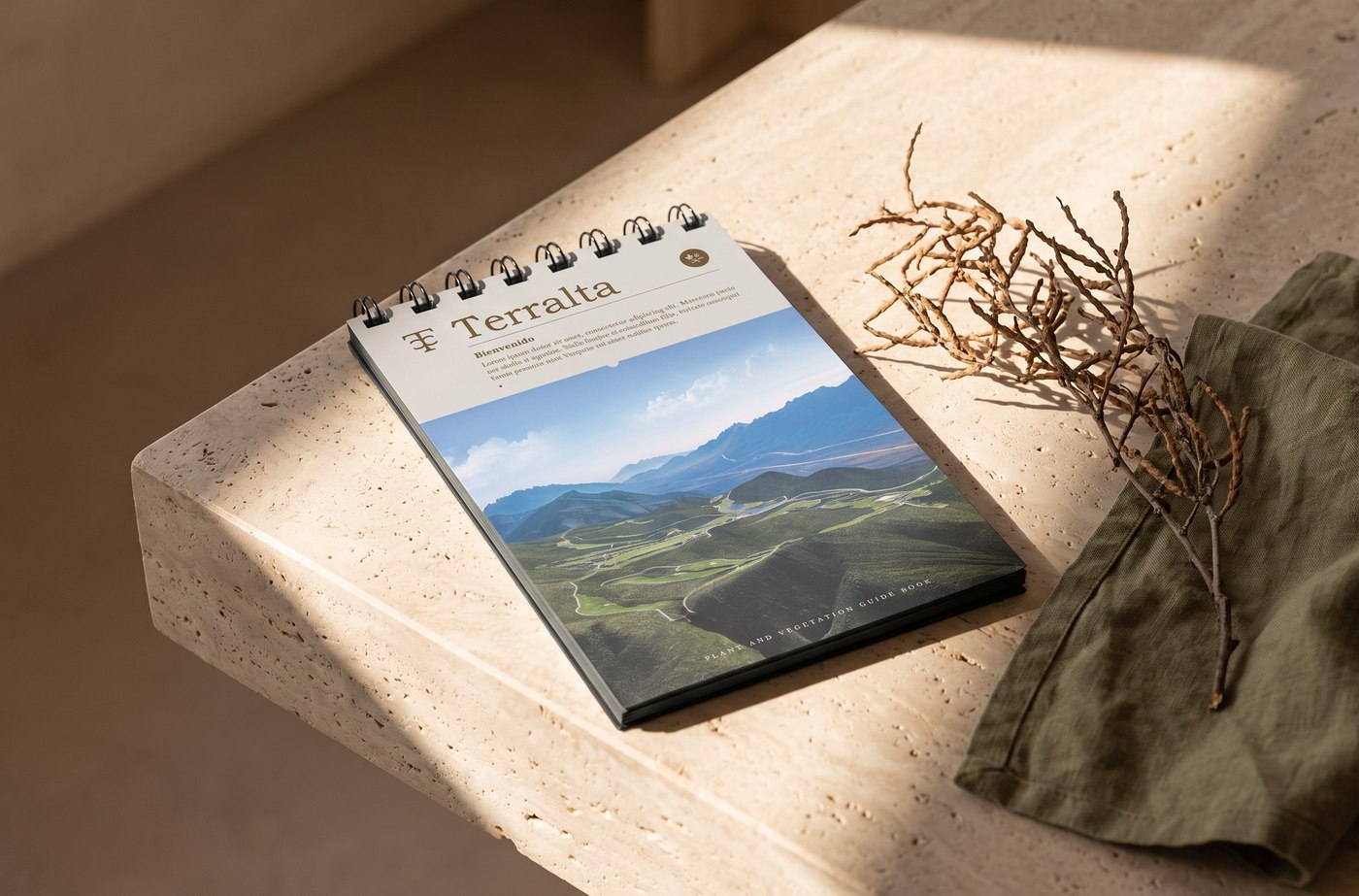
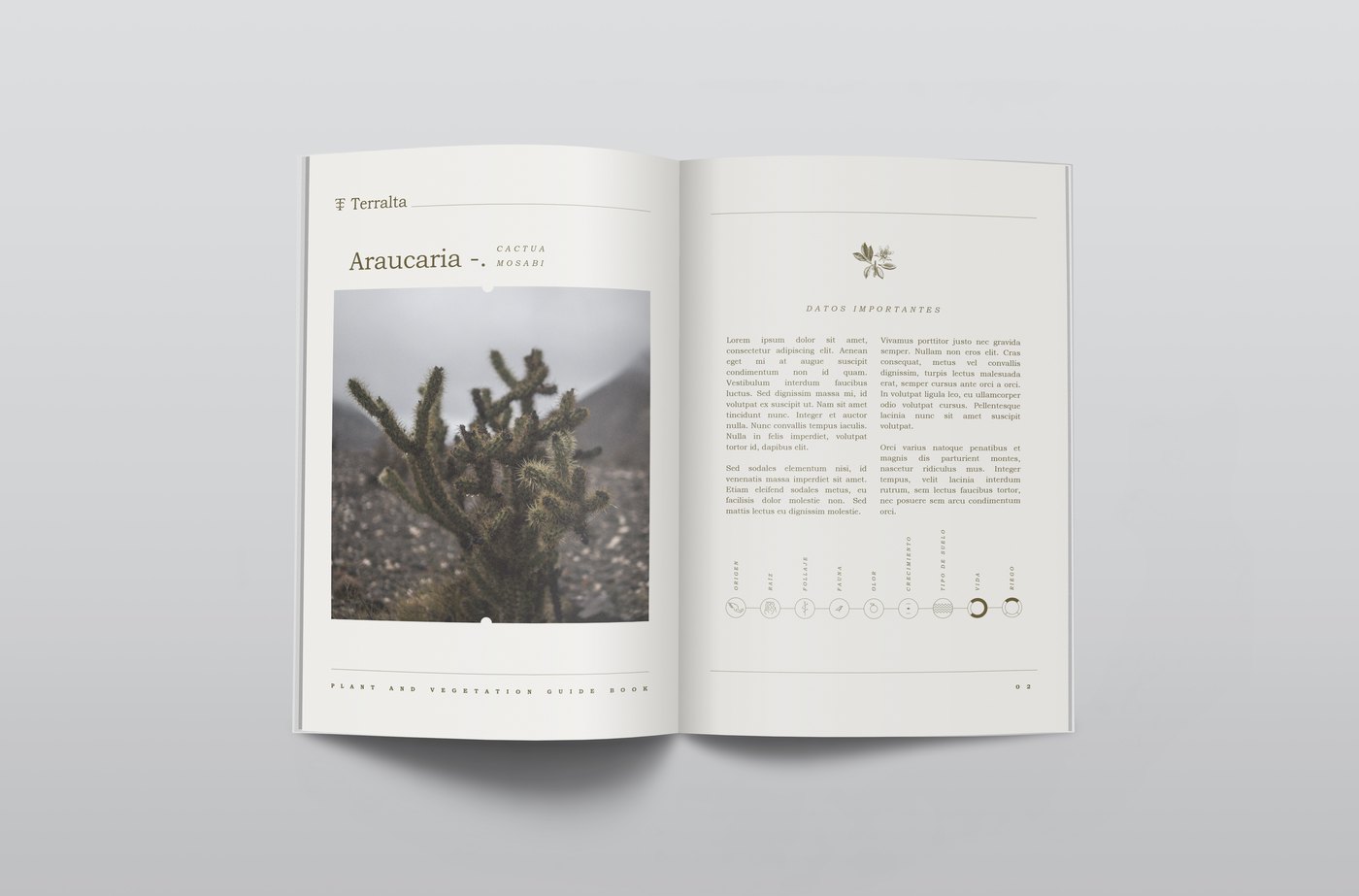
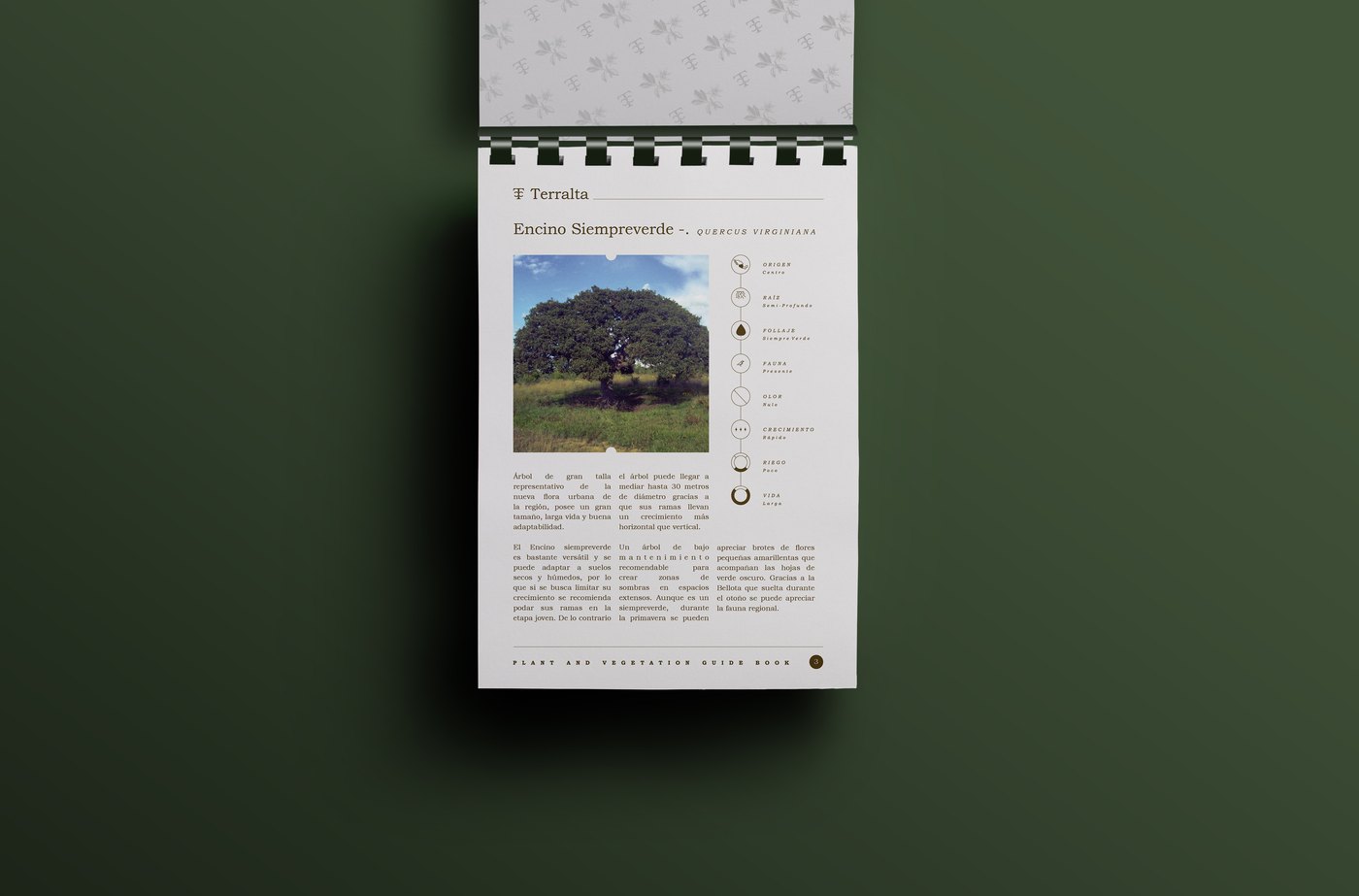
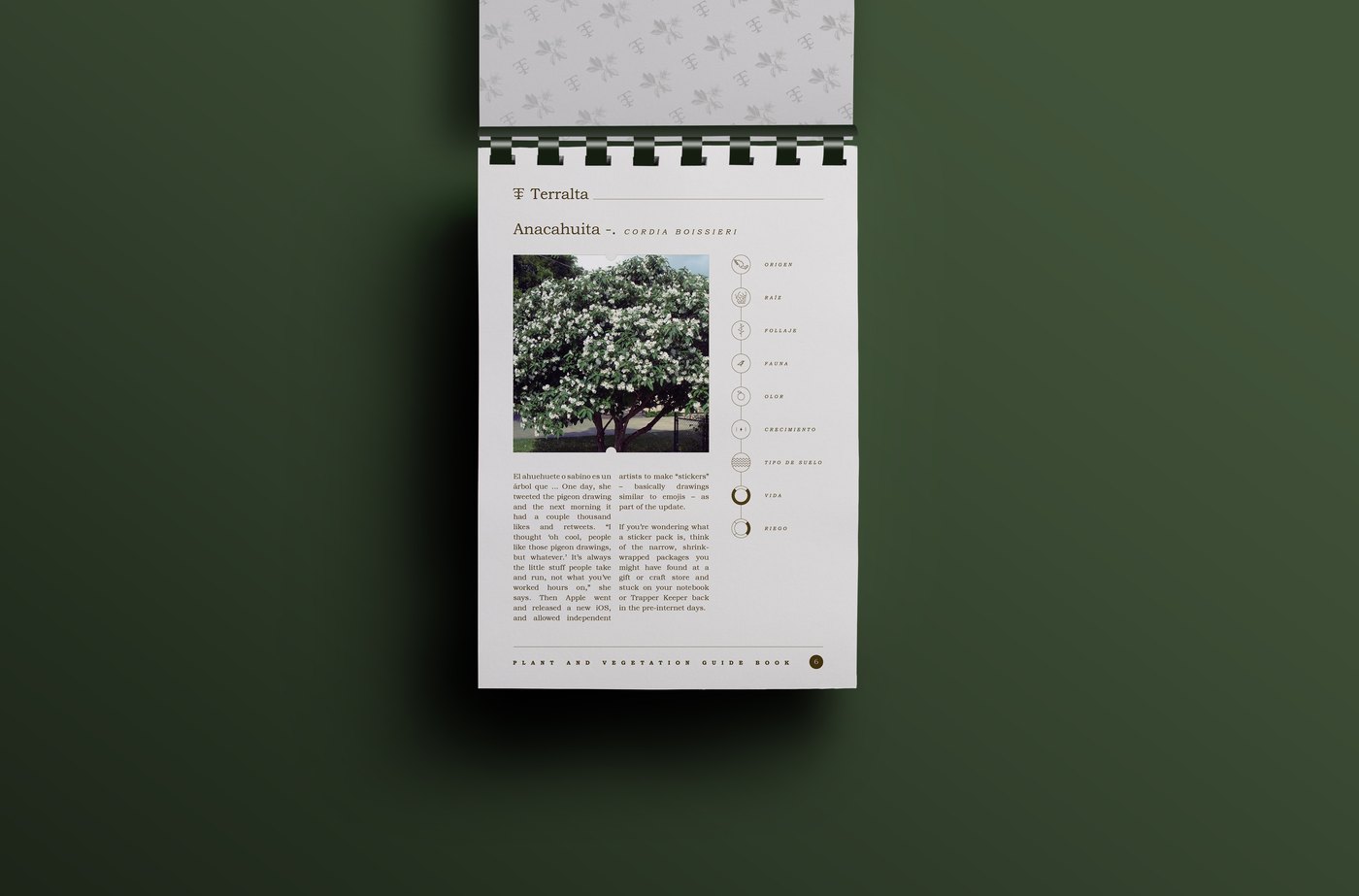
Idea. A brochure built like a field guide. The site catalogued species by species — the guamúchil, the nopal, the duraznillo, the encino manzanita — each given its own spread, its own photograph and its own entry.
System. An indexed editorial structure, a restrained typographic hierarchy that lets the photography carry the pages, and production specified to match — a single Pantone on uncoated recycled stock, so the object itself feels like the place.
The Impact
A printed editorial system delivered to press. The brochure is the result: an artefact that argues for a development by describing the ground it stands on rather than the buildings that had not yet been built.
Document what is already there, and you do not have to render what is not.
What this project proves